Building excellence: developing skills for the future of biobanking
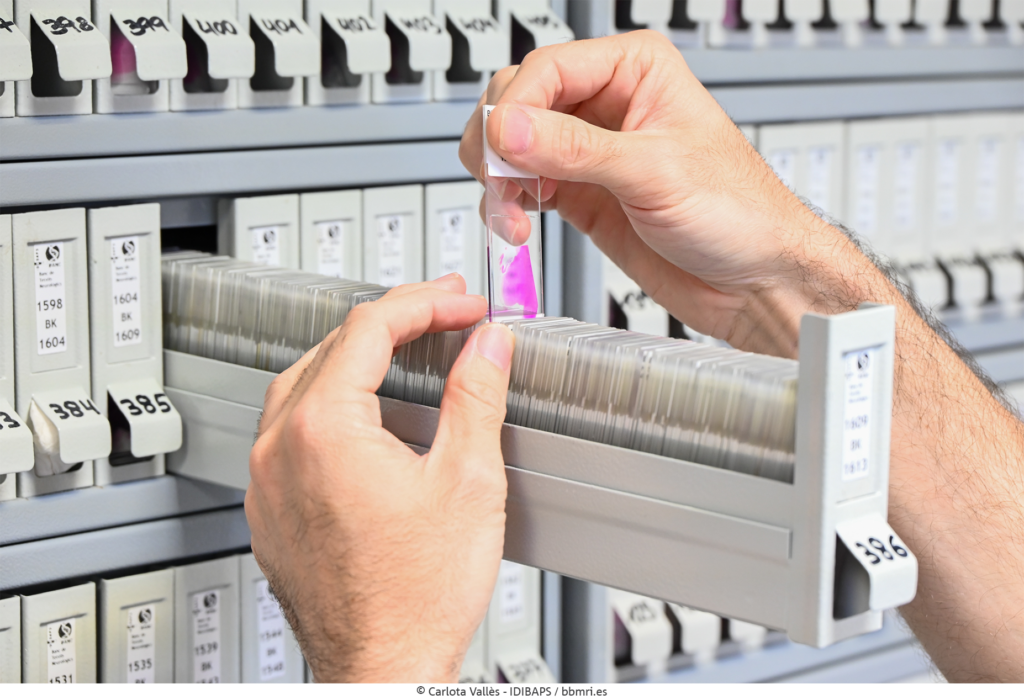
Picture courtesy of: Carlota Vallès – IDIBAPS/ BBMRI.es
This article comes from Marialuisa Lavitrano, National Node Director BBMRI.it
Biobanking stands at a crossroads, where scientific ambition meets operational complexity. As the scale, diversity and sensitivity of biological collections continue to expand, the conversation is no longer confined to infrastructure or technology, it is fundamentally about people. The session “Building Excellence: Developing Skills for Future Biobanking” reinforces a simple but often underestimated truth: high-quality biobanks are built by highly skilled professionals.
From my perspective as coordinator of the RItrain and RItrainPlus H2020 projects and as Director of EMMRI, this message resonates deeply. Over the past years, we have witnessed how investment in structured training frameworks can transform not only individual careers but entire research ecosystems. Biobanking is no exception; in fact, it may be one of the fields where this transformation is most urgently needed.
The modern biobank is no longer a passive repository. It is an active, data-driven, quality-regulated and ethically complex environment requiring a multidisciplinary workforce. Project managers must navigate regulatory landscapes and sustainability models. Technical staff must ensure the integrity of samples through standardised procedures. Data specialists must guarantee interoperability and compliance with evolving digital standards. Each role is critical, and none can rely solely on ad hoc learning or outdated training paradigms.
This session effectively highlights the shift toward tailored, role-specific education pathways. One-size-fits-all training is no longer sufficient. Instead, we must embrace modular, flexible, and competency-based approaches that reflect the diversity of biobanking roles. The experience from RItrain and RItrainPlus demonstrates that structured curricula, combining technical expertise with leadership, management and communication skills, can significantly elevate the performance of research infrastructures.
Upskilling is not merely a professional development exercise; it is a strategic imperative. Biobanks operate within a framework of trust, trust from donors, researchers, clinicians and society at large. Maintaining this trust requires consistency, transparency and excellence at every operational level. Training, therefore, becomes a cornerstone of quality assurance, not an optional add-on.
Equally important is the recognition that learning must be continuous. The rapid evolution of technologies such as genomics, digital pathology, and AI-driven data analysis means that today’s expertise can quickly become obsolete. The biobank workforce must be equipped not only with current knowledge but with the capacity to adapt. Lifelong learning, embedded within organisational culture, is essential.
Another key takeaway from the session is the value of community-driven training ecosystems. Collaboration across institutions, countries and disciplines enables the sharing of best practices and the harmonisation of standards. Initiatives like RItrain and RItrainPlus have shown how pan-European efforts can create scalable training solutions that benefit the entire research infrastructure landscape, including biobanking.
Looking ahead, the challenge is not simply to provide more training, but to ensure its quality, relevance and accessibility. This requires coordinated efforts between policymakers, research infrastructures, academic institutions and professional networks. It also requires sustained investment, financial, institutional and intellectual.
In conclusion, excellence in biobanking cannot be separated from excellence in people. The future of biobanking depends on our ability to cultivate a skilled, adaptable and forward-thinking workforce. Sessions like this serve as an important reminder that while technologies and standards will continue to evolve, it is human expertise that ultimately defines quality. Building that expertise is not just an operational necessity, it is the foundation of sustainable, impactful biobanking.