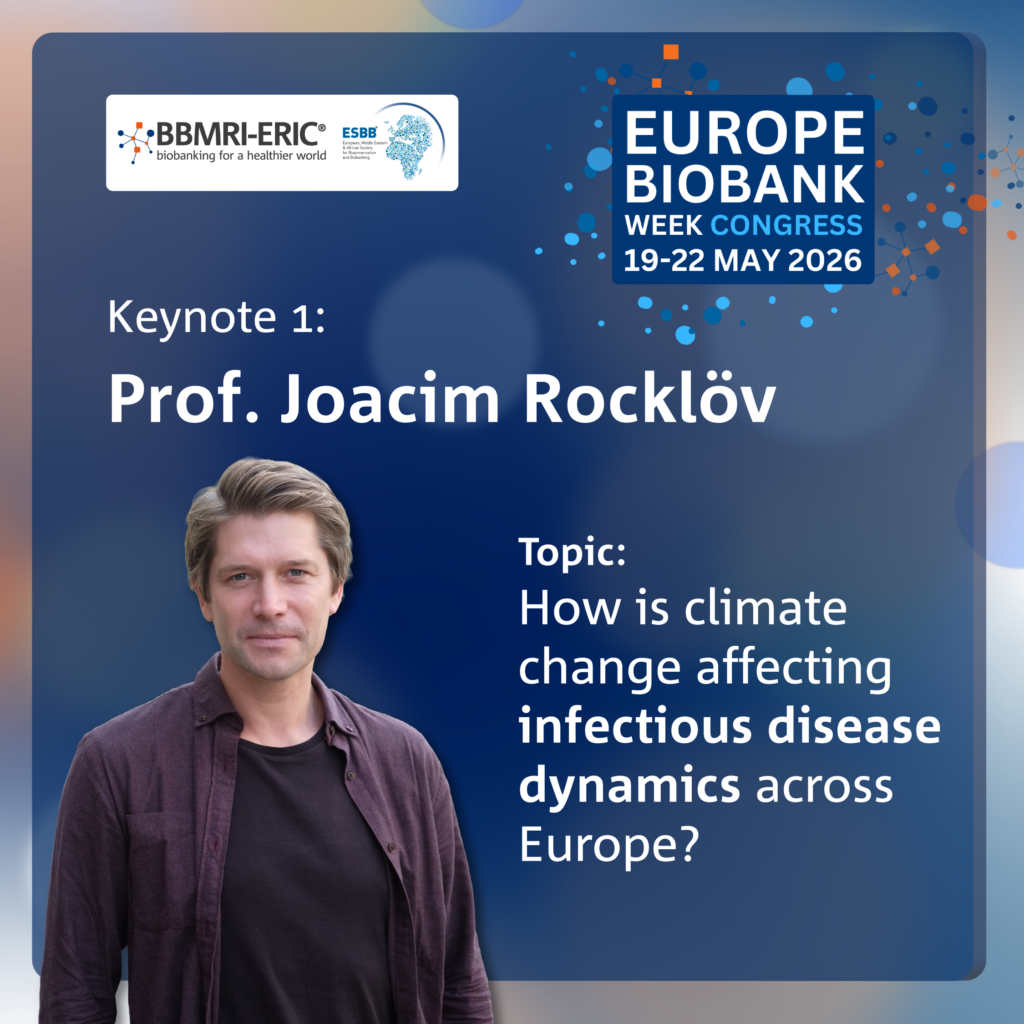
#EBW26 Previews: Keynote with Prof. Joacim Rocklöv
We are honored to announce that the first keynote of #EBW26 will be delivered by Prof. Joacim Rocklöv, Head of Heidelberg Planetary Health Hub and Alexander von Humboldt Professor at Heidelberg University. The subject of the keynote will be ‘How is climate change affecting infectious disease dynamics across Europe’.
Prof. Joacim Rocklöv
Professor Joacim Rocklöv is an Alexander von Humboldt Professor at Heidelberg University with a focus on modelling of climate-sensitive infectious diseases. He heads the Heidelberg Planetary Health Hub, which is dedicated to developing and applying innovative methods to understand and predict how climate change and the polycrisis influences infectious disease dynamics and how the impact may unfold in the future.
Keynote abstract
Climate change is reshaping the landscape of infectious diseases across Europe, with particularly profound implications for all climate-sensitive, especially arboviral diseases. This talk will highlight current evidence on how warming temperatures, shifting precipitation patterns and extreme events are influencing the emergence, transmission and geographic expansion of pathogens and vectors. Using concrete European examples, it will distinguish between what is well established and where critical uncertainties remain.
Beyond climate alone, the presentation will explore how interacting stressors—including biodiversity loss, land-use change and pollution—amplify or modify disease risks within a broader planetary health framework. Emphasis will be placed on advances in monitoring, modelling and early warning systems, as well as remaining gaps in surveillance and attribution.
By integrating perspectives from epidemiology, climate science and ecology, this talk aims to provide a forward-looking understanding of how multiple, intersecting crises are shaping infectious disease dynamics in Europe—but also discuss how novel approaches to surveillance and prediction can help with more targeted and strategic responses.
Session details
- Date: Wednesday 20 May
- Time: 11:30-12:30